Building Glass: Why I Replaced wp-admin
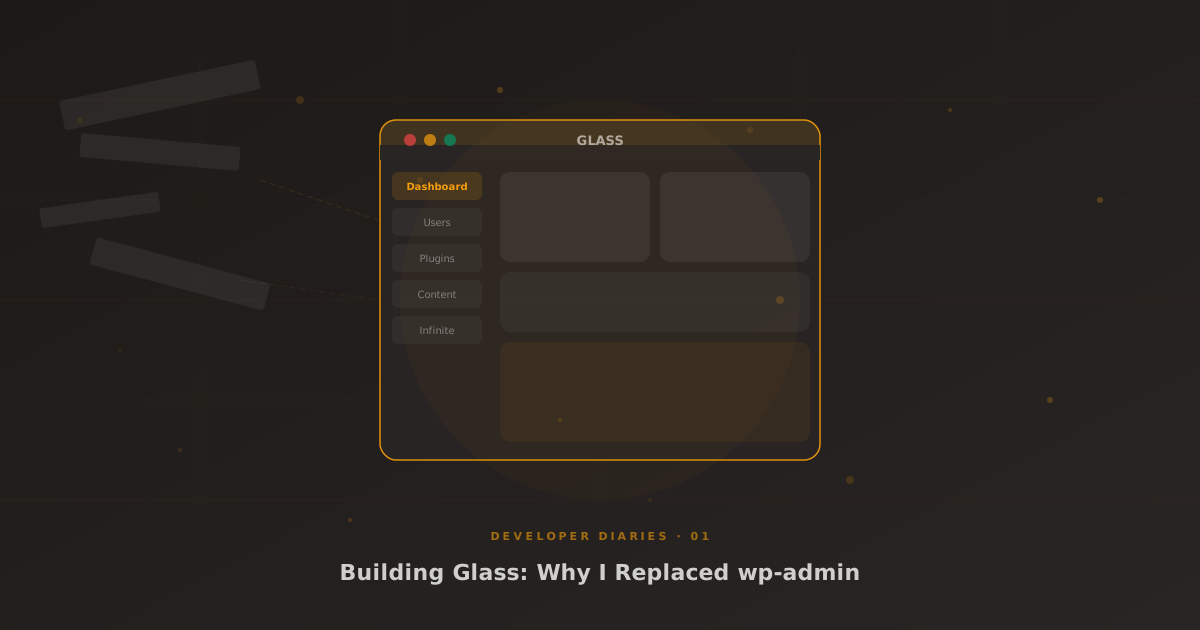
I didn’t set out to replace wp-admin. Nobody does. You start by thinking “I’ll just clean up a few things” and eighteen months later you’ve built a complete admin shell with clean URLs, an app registry, a command palette, Glass Windows desktop mode, and a lock system that can hide wp-admin entirely.
The problem with wp-admin isn’t that it’s ugly, it’s that it’s hostile to anyone who isn’t a developer. I run an MSP. My staff need to manage invoices, check tickets, update customer records. They don’t need to see the WordPress dashboard, the plugin update nag, the “PHP version” notice, or any of the other noise wp-admin throws at them. They need a focused, task-oriented interface.
The Glass Shell
Glass is, at its core, a sidebar and a content area. That’s it. The sidebar is an app registry, every installed AJT plugin (and any “adopted” third-party plugin) registers itself as an app with an icon, a label, a capability requirement, and a render callback. The content area is a blank canvas that each app fills.
Clean URLs mean the admin looks like a real application: /glass/dashboard, /glass/invoices, /glass/infinite. No admin.php?page= query strings. Each URL maps to a registered app via a rewrite rule, and the template loader renders the Glass shell with the correct app content.
Plugin Adoption
This was the feature that made Glass useful beyond our own plugins. Any WordPress plugin can be “adopted” into Glass, its admin pages render inside an iframe within the Glass shell. No code changes required in the adopted plugin. You get the clean sidebar navigation, the consistent header, and the branded experience, even for plugins that have no idea Glass exists.
Glass Lock
When Glass Lock is active, non-admin users are redirected from wp-admin to the Glass interface. Menu items are suppressed. Access rules control which apps each role can see. For our MSP customers, this means they never see wp-admin at all, they see a clean, branded portal that feels like a purpose-built application.
Glass is now at version 10.2.1 with 28 native apps, 65+ Infinite section types, 7 admin themes, and a codebase of over 75,000 lines. It started with a sidebar and a frustration.